North Korea May Open Up to the World Sooner Than Expected
Updated: Jun 6

Most western media and experts explain North Korea primarily through the lense of nuclear weapons, human rights, or regime stability. However, the reality could be so much simpler. Like other nations, North Korea must ensure the survival of its population and cannot remain indefinitely insulated from economic pressures.
Many observers argue that the Trump administration has shifted its attention towards Iran, China, Russia, and domestic political issues, pushing North Korea down the list of strategic priorities. Indeed, the United States appears to have reduced its focus on North Korea while concentrating military resources in the Middle East, including capabilities such as the THAAD missile defense systems previously deployed in South Korea.
However, North Korea is not merely an adversarial state from the American perspective. It occupies a strategically significant position between China and Russia and sits at the center of many economic, political, and military calculations in Northeast Asia. As the United States continues to redesign its regional strategy, North Korea will likely emerge as an issue of high priority.
North Korea also faces severe practical limitations. According to defectors and former senior officials who have left North Korea, even major cities including Pyongyang continue to experience shortages across electricity generation, housing, water and sewage systems, telecommunications, logistics networks, and industrial infrastructure.
For North Korea, the central national challenge may not be whether to retain nuclear weapons, but rather how to improve its economy while retaining them. This may ultimately become the most realistic point of negotiation between Washington and Pyongyang.
There remains a genuine possibility that North Korea could explore new forms of economic cooperation with the United States in exchange for limitations on further nuclear development, stronger international oversight, and a controlled market liberalization. Such cooperation would need to extend far beyond traditional aid programs. What North Korea requires is not merely financial assistance but the fundamental infrastructure of a modern industrial society, including electricity, housing, transportation networks, telecommunications, food systems, and energy production. For North Korea, economic necessity proves to be a far more powerful driver than political ideology.
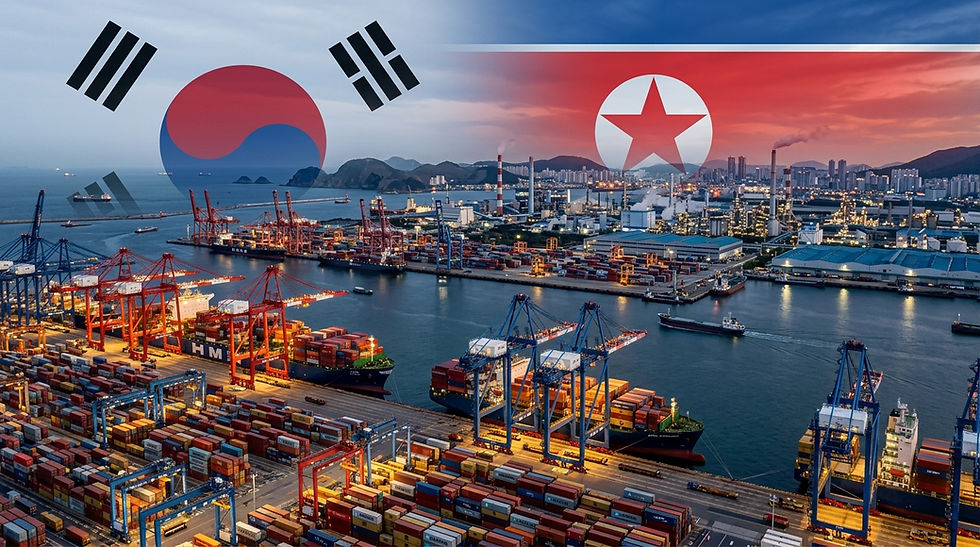
The opening of North Korea will also align with significant American economic interests. Through North Korea, the United States could potentially gain greater access to Arctic shipping routes, strengthen logistical connections involving the Port of Busan, reshape Northeast Asian transportation networks, influence development in Russia’s Far East and northeastern China, and reinforce broader regional security arrangements involving Japan.
In essence, North Korea would not simply represent the market liberalization of a small country. It could become one of the most consequential historical developments of the twenty-first century, reshaping both the economic architecture and geopolitical balance of Northeast Asia, and therefore, the world.