A Nankai Megathrust Earthquake Could Open a New Chapter in Japan–South Korea Relations
A major earthquake in Japan could become the starting point for a new era of cooperation between Japan and South Korea, the two countries whose relationship has often been shaped by centuries of historical tension.
For years, the Japanese government has warned of the possibility of a magnitude 8–9 Nankai Trough megathrust earthquake occurring within the coming decades. Under worst case scenarios, millions of people could be displaced. The question would no longer be whether such a disaster will occur, but rather who will be capable of responding first and most effectively when it does.
In this context, South Korea - and particularly regions such as Gangwon Province - could play a most important role. While many people continue to view Japan and South Korea primarily through the lens of historical disputes, major disasters often create forms of cooperation that politics alone cannot achieve. Following the 2011 Great East Japan Earthquake, South Korea was among the first countries to provide assistance and support to Japan.
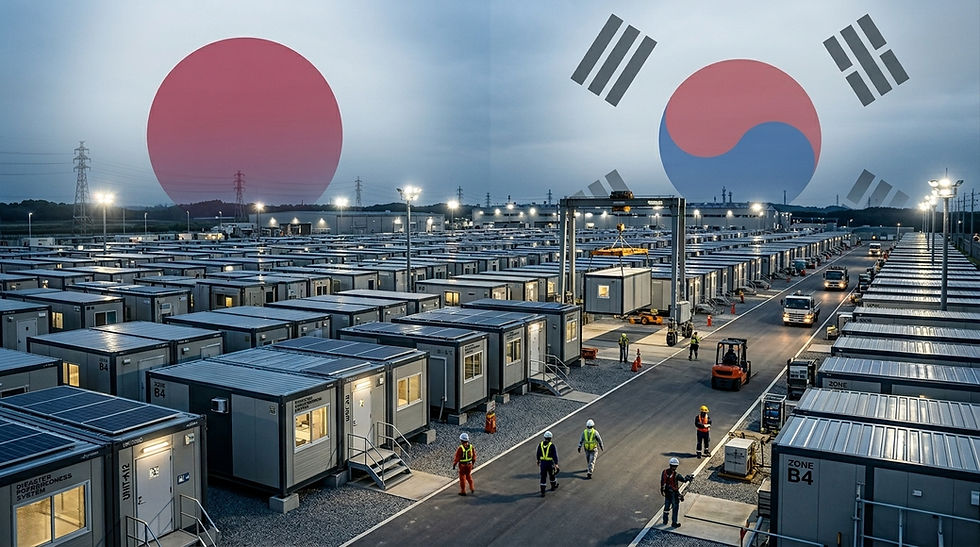
South Korea possesses several advantages in such a scenario. It is one of Japan’s closest neighbors and maintains world-class construction, manufacturing, and logistics capabilities. South Korean companies could potentially deploy modular housing systems capable of providing large-scale temporary accommodation within days or weeks. Regions such as Gangwon Province could also be considered as forward logistical hubs or temporary support centers for displaced populations if circumstances required. In this respect, our partners and associates in construction are ready to respond.
At the same time, such assistance would not be purely humanitarian. Governments rarely separate large-scale disaster response from broader diplomatic and strategic considerations. South Korea would likely seek to strengthen trust, deepen bilateral cooperation, and secure long term political and economic benefits through any major assistance effort.
Disaster response in the twenty-first century is no longer simply an act of charity. It is increasingly a sophisticated business, a logistical operation, and a diplomatic instrument through which nations build new relationships and expand influence. For this reason, if a Nankai Trough megathrust earthquake occurs, it would entirely be possible that government agencies, corporations, and related institutions in both South Korea and Japan would already have examined elements of cooperation behind the scenes, including supply specifications, operational conditions, logistics systems, and support mechanisms for displaced populations.