
Do Schools Offer Every Opportunity Students Deserve?
Updated: Apr 26
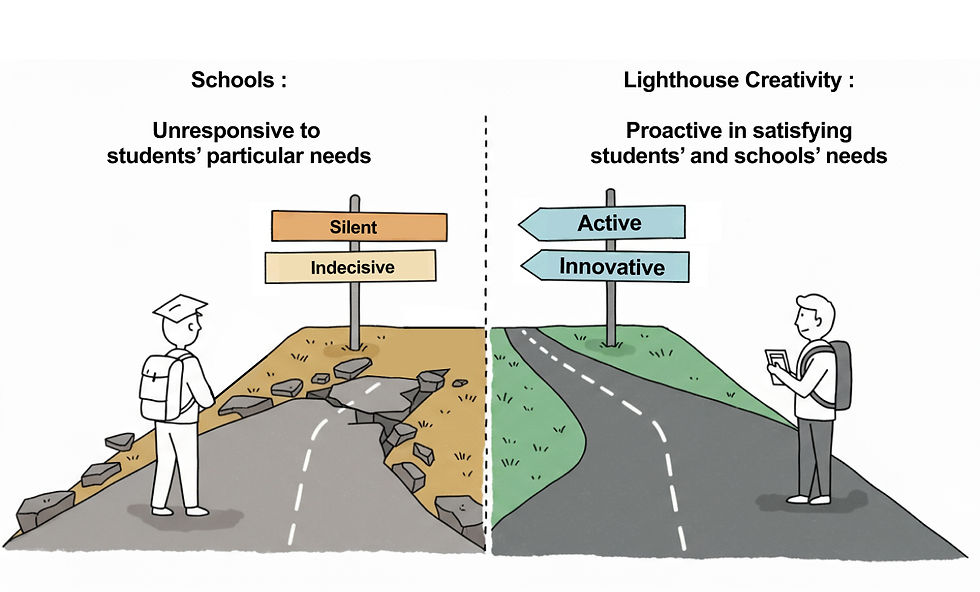
1. Schools say “fit” is most crucial in their students’ college application process.
So schools understand how fit works in the competitive college admission. However, how far and deep do they explain relevant details to ensure that their students and parents know what to do? Are they relieved from accountability by telling their students and parents to own the application process and take responsibility? If schools minimize or keep their roles passive rather than maximizing their roles to facilitate their students’ success, are they limited to providing at a bare minimum academic and extracurricular experiences that likely won’t give their students a strongest boost for success? What causes or prevents them from being proactive in maximizing every student’s success? That’s what every school should be clear about.
2. Schools maintain “when” students need to shape their fit for a particular college vague at best.
Schools expect their students and parents to understand or acknowledge how “fit” operates. Yet their college counseling department together with their teachers and administrators rarely go as far as to help their students secure the most competitiveness possible, which defeats the purpose of installing the department. In lieu of letting students and parents figure out what it really takes to be most competitive on their own, schools can disclose a highest quality information well before their students matriculate since fit is nothing their students can easily create during their senior year. They can allow us to provide not only the highest quality information on the competitive to most competitive college admission, but also the best performing tools their students need for creating their fit for the college of their choice.
3. Schools keep their silence on the displacement of “old” safety schools.
So many seniors get rejected from what used to be easy-to-get-into colleges for numerous reasons. Among which, inflation has swept through the grades and scores submitted, and the quality of applicants has surged each year. Yet the real insanity lies with the fact that many colleges and universities are now more to most selective. Schools across the nation and the world let their students fall short of the performance in their achievements and the impact needed to make the final round of admissions review. They also let their students and parents think there isn’t much that can be done to fix their situation. Silence often insinuates negativity, which we don’t endorse and instead turn around to the students’ advantage. All schools need to do is allow us to demonstrate for their students and parents how their situation can be improved by making their preparation for every “old” safety school more than enough to get into the top tier college of their choice.
4. Schools rarely think and act far ahead.
Had they moved faster and farther, schools wouldn’t be faced with many challenges of artificial intelligence in their classroom. They need not fear that the quality of their students’ learning experience might go out of control. Restraining students with “mechanical” and “old” routines from reaching further and deeper with their intellectual investigation of subjects that influence their growth ought to be abandoned. Instead, they must be given every opportunity to claw for every inch possible in exploring and experiencing the future ahead. That’s exactly what our professors and experts from top tier colleges offer to students. At the end of the day, students learn and realize that creativity is among the paramount qualities and values our professors and experts endeavor to instill in them on top of helping them maximize their chances of success for their college of choice.
5. Schools often don’t question as needed in facing challenges and hardly embrace changes.
To make necessary changes such as for their students’ improved performance, schools need to think. To think, they need to raise questions. However, for their lack of familiarity with questioning themselves, schools choose to stay unresponsive or inactive. Sacrificing their students’ time and opportunities has been proven by their lack of innovation and attempt. Their lack of growth in performance in more to most selective college matriculation, conjoined by their students’ unceasing struggle with making their way through college and beyond, is a clear evidence that significant changes are necessary within schools. All schools need to do is allow us to present what options they have in turning their situation around to their students’ benefit. Transparency and control are maintained under each school’s supervision.


